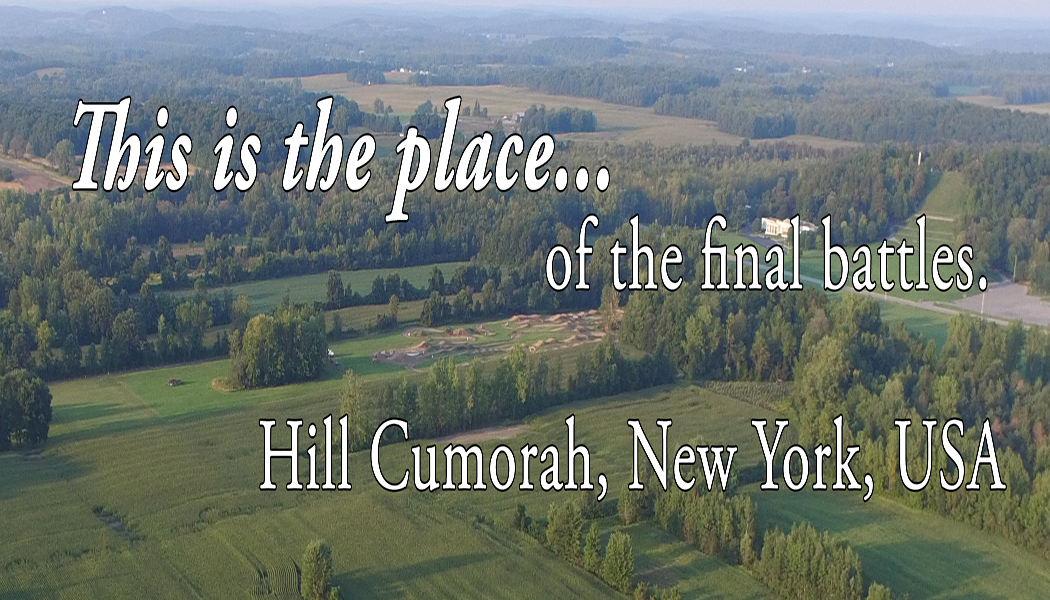
Tuesday, March 12, 2019

more on "good information"

Yesterday I broke my nose (again) playing basketball. At the doctor's office, they suggested I get a pneumonia vaccine, which I did.

My arm is still sore, but it's a reminder that "prevention is better than cure." It's an obvious metaphor for how "good information," even if painful at first, can prevent serious problems later on.

"Good inspiration is based upon
good information."
I often think about what President Nelson said in April 2018, his first General Conference as President of the Church:

"I know that good inspiration is based upon good information."

Let's consider what is "good information."

"Good information" is surely "important information" we need to make informed decisions.

One thing we can be sure of: "good information" does not consist of "no information" or "censored information."
_____

This morning I was reviewing and annotating a letter Joseph Smith wrote to W.W. Phelps in 1832. (This is part of a Church History project I'm working on.) 

Here's a link: 
https://www.josephsmithpapers.org/paper-summary/letter-to-william-w-phelps-31-july-1832/1

In that letter, Joseph wrote this:

the spirit which I possess enjoy, the feeling of my soul enquires does this letter give me the important information which I stood in need of at the present critical moment from your hand concerning yourself your family & business & the faith & fellowship & prosperity of the brethren in zion &c

I find this interesting in today's world where Church employees and departments are censoring information at various levels. I've been informed about instances in which they are even depriving Church leaders and members of important information and perspectives. One example was the first published draft of the Gospel Topics Essay on Book of Mormon Geography.*
_____

In light of all this, and with Joseph's letter to Phelps in mind, consider this:

We should all ask ourselves, does the information we receive "give us the important information which we stand in need of at the present critical moment?"

If not, we owe it to ourselves to ask why not.

What important information do you need?

We can't make informed decisions without good information. According to President Nelson, we can't even get good inspiration without good information.

Joseph Smith himself recognized this when he complained to Phelps for not sending "important information" he needed.
_____

This blog focuses on Book of Mormon geography.

It may surprise some people, but this isn't a topic I spend a lot of time on. However, I think it's critically important because it has implications for other topics.

It's also an area in which we can all observe agenda-driven censorship that deprives us of "good information" and "important information."
_____

By now, it's apparent to everyone that the dominant intellectuals in the Church have established and enforced their views through censorship. This is particularly true of the M2C citation cartel** and the Church History Department. Both groups deprive members of the Church of "good information" solely to promote their particular agendas.

Two specific examples are the censorship in the Joseph Smith lesson manual and in the Saints book. (You can click on those links to see more detail.) There are many more examples, only a few of which I've shown on this blog and elsewhere.

An easy remedy for the Cumorah issue would be to provide all students in CES and BYU with my proposed BYU packet, which is available here:

http://www.lettervii.com/p/byu-packet-on-cumorah.html

Instead, few if any CES/BYU students ever learn about these teachings. Many of their teachers don't even know about them. 

I'm not saying anyone has to believe or accept these teachings. It's not a question of prophetic or Church support for anyone's ideas.

What I'm saying is, no one can make an informed decision without at least considering these teachings.

The M2C intellectuals know about these teachings but they don't inform their followers about them. To the extent they address these teachings, they dismiss them as unreliable and wrong. Then they conflate them with separate teachings about how we don't know the specific locations of Book of Mormon locations other than Cumorah, and the even less relevant teachings about the locations of modern Lamanites (which of course has nothing to do with the location of Book of Mormon events).

And that's all fine. They can put whatever spin they want on the source materials.

But they should let their students and followers make informed decisions by providing this "good information" instead of censoring this "good information" purely to protect their own M2C ideology.

I encourage everyone who has or knows a student in Seminary, Institute, a BYU campus, or even in Gospel Doctrine class to share this "BYU packet" so people can make informed decision based on "good information."

Who knows? Maybe, as President Nelson taught, some "good inspiration" might come from it.
_____

*The first published draft of the Gospel Topics Essay on Book of Mormon Geography* quoted President Ivins out of context, without also quoting his specific remarks on Cumorah, which I discussed here:

https://presidentnelsonspeaks.blogspot.com/2019/02/revisions-to-gospel-topics-essay-on.html

It's fascinating that the revised essay deleted the President Ivins quotation. I discussed that here:

http://bookofmormonwars.blogspot.com/2019/02/great-news-revised-gospel-topics-essay.html

** The M2C citation cartel is the group of scholars (and their followers and employees) who promote the Mesoamerican/two-Cumorahs theory of Book of Mormon geography. The cartel includes BYU Studies, Book of Mormon Central, the Interpreter, FairMormon, Meridian Magazine, many prominent blogs, and others.


Friday, March 8, 2019

The Next Mormons by Jana Riess

Jana Riess' book The Next Mormons has been getting a lot of attention, as it should. There's a useful review of some aspects of it here:

http://www.stakeandwardresources.org/judgmental-ism%20and%20exclusiveness
_____

Because this blog focuses on Book of Mormon issues, I won't discuss other interesting aspects of the book here (but I will elsewhere).

For now, I'll mention one of Riess' findings.

She asked about the degree of certainty people have about specific LDS teachings. In this table, she shows that the percentage of members who are confident that the Book of Mormon is a literal, historical account is declining significantly.


BYU Fantasy/mythology map of
the Book of Mormon
I expect these percentages to continue to decline among younger generations because they are being taught to understand the Book of Mormon by referring to the fantasy/mythology maps developed by CES and BYU.

It's the same problem missionaries have when they tell investigators/friends that the Book of Mormon is 1,000 years of a real history of real people--except we have no idea where any of it took place.

How do we expect investigators to respond? How would any of us respond?
_____

The explanation of Book of Mormon historicity now being given is a complete reversal of what Joseph and Oliver taught about the one certain connection between the Book of Mormon and the real world: the New York Cumorah.

In the early 1900s, certain RLDS scholars decided the New York Cumorah wasn't feasible.

They figured Joseph and Oliver (and all their contemporaries and successors) were wrong about Cumorah.

They figured there had to be "two Cumorahs." The real one was in Mexico, while the hill in New York was falsely labeled "Cumorah" because of tradition. This is the Mesoamerican/two-Cumorahs theory (M2C).

Certain LDS scholars adopted the RLDS theories over the objections of Church leaders at the time. They claimed that the prophets who taught the New York Cumorah were merely expressing their private opinions and were wrong.

Building on illusory correspondences with Mesoamerica, these scholars further developed M2C with a series of books and articles published through the M2C citation cartel that censors alternative ideas, including the teachings of the prophets.
_____

M2C has become the de facto standard. Despite the official policy of neutrality, M2C is taught in Church media, visitors centers, and CES/BYU.

To accommodate M2C, the Church History Department censored Cumorah from the book Saints.

To accommodate M2C, the Church Correlation Department censored portions of the Wentworth letter from the lesson manual on Joseph Smith.

Now, no LDS youth is taught what the prophets have consistently and persistently taught about the New York Cumorah.

Now, every LDS youth is taught a combination of M2C and the fantasy/mythology maps.

Now, when an LDS youth discovers, on his/her own (usually through the Internet) what the prophets have taught about the New York Cumorah, their CES/BYU teachers explain that the prophets were wrong.

That leads to a second major issue brought out in The Next Mormons that we'll discuss in the next blog post.
_____


Thursday, March 7, 2019

Which Cumorah narrative makes sense to you?

In evaluating the Cumorah alternatives, here is a comparison chart to consider. It lists the alternative explanations of well-known accounts in Church history.
_______________________

Note that "Mesoamerica" is a proxy for every theory that places Cumorah somewhere other than in New York.

As always, I emphasize that people are free to believe whatever they want. The table presents facts about the two alternatives. It is intended to clarify what others think so you can compare your own beliefs and make up your own mind.

Which do you find more compatible with your beliefs? Which is more compatible with the historical evidence? Which is best corroborated by the sciences?

You can print this table and put a check mark in each row for the scenario that makes sense to you. 
Mesoamerica (M2C)
Moroni’s America
1. Mormon and Moroni lived in Mesoamerica.
1. Mormon and Moroni lived in North America.
2. Mormon wrote his abridgment somewhere in Mesoamerica and hid up all the Nephite records in a repository in the Hill Cumorah (Mormon 6:6), a hill somewhere in southern Mexico, before giving "these few plates" to Moroni.
(Note: In #6 below, Moroni told Joseph the record was "written and deposited near" Joseph's home. https://www.josephsmithpapers.org/paper-summary/history-1834-1836/69)
2. Mormon wrote his abridgment in the vicinity of western New York and hid up all the Nephite records in a repository in in the Hill Cumorah (Mormon 6:6), the hill near Palmyra, New York, before giving "these few plates" to Moroni.
(Note: In #6 below, Moroni told Joseph the record was "written and deposited near" Joseph's home. 
3. Thinking he would not live long, Moroni adds a couple of chapters to his father’s record.

Then he travels 3,400 miles to New York, and hides the plates in the stone box, thinking he would not live long.
 
Or, he keeps the plates with him while he roams around Mesoamerica for decades before taking them to New York. 

Or he hides them somewhere else until he is ready to take them 3,400 miles to New York.
3. Thinking he would not live long, Moroni adds a couple of chapters to his father’s record.

Then he hides the plates in the stone box he built in the hill Cumorah in New York, separate from his father's depository in the same hill. 
4. Later, Moroni retrieves the plates of Ether from the repository in southern Mexico and abridges them. 

He adds the abridgment to his father’s abridgment, along with a sealed portion, and hides the plates again in New York. 

Or, Moroni abridges the plates of Ether right after his father died, and the plates of Ether were among the few his father gave him, and after he abridges them, he returns the original plates to his father's depository. 

Or the plates of Ether are the sealed portion.
4. Later, Moroni retrieves the plates of Ether from the depository in New York and abridges them. 


He adds this abridgment to his father’s abridgment, along with a sealed portion and his own commentary, and puts this collection of plates into his stone box. He returns the original plates of Ether to the depository in the Hill Cumorah in New York.
5. Later, Moroni returns to the repository in southern Mexico and gets a sermon and letters from his father. He adds this material to his final comments—the Book of Moroni—and returns to New York to put the finished record back in the stone box.

Or, Moroni had his father's writings with him all along and kept them with him when he died, so they are buried with him.
5. Later, Moroni returns to the depository in New York and gets a sermon and letters from his father. He adds this material to his final comments—the Book of Moroni—and puts his finished record back in the stone box. He returns the source material to the depository.
6. Moroni visits Joseph Smith in 1823 and tells him the record was “written and deposited” not far from Joseph’s home. But this is a mistake because the record was written in Central America and deposited in New York. Either Joseph or Oliver misunderstood, or else Moroni misspoke.
6. Moroni visits Joseph Smith in 1823 and tells him the record was “written and deposited” not far from Joseph’s home. Moroni accurately describes where the record was written.
7. Joseph Smith obtained the abridged record of the Nephites and the Jaredites from Moroni’s stone box. 

He translated part of these plates in Harmony and gave them back to an angel. 

The Lord told him to translate the engravings on the plates of Nephi (D&C 10), even though he had reached the end of the plates (the Title Page) and hadn't yet found these plates of Nephi.

Or, the Lord told him to translate the engravings on the plates of Nephi but Joseph wasn't using the plates anyway (they were covered with a cloth) so it didn't matter whether he had the plates of Nephi in Harmony. 
7. Joseph Smith obtained the abridged record of the Nephites and the Jaredites from Moroni’s stone box. 

He translated these plates in Harmony and gave them back to an angel because he was finished with them. 

The Lord told him to translate the engravings on the plates of Nephi (D&C 10), but he didn’t have those yet.
8. In Harmony, Joseph translated the Title Page from the last leaf of the plates. He had it printed and delivered to the U.S. federal district court in New York as part of his copyright application.
9. On the way from Harmony to Fayette, David Whitmer said he, Joseph and Oliver encountered an old man bearing the plates who said he was heading for Cumorah. Joseph said it was one of the three Nephites. 

But David was mistaken because he conflated the false tradition of the New York Cumorah with another unspecified event.

Or David misremembered, intentionally misled, etc.

The Saints book omits David Whitmer's explanation that this messenger was one of the Three Nephites who took the Harmony plates to Cumorah because David was confused or wrong.
9. On the way from Harmony to Fayette, David Whitmer said he, Joseph and Oliver encountered an old man bearing the plates who said he was heading for Cumorah. Joseph said it was one of the three Nephites. 

This was the messenger who had the Harmony plates and was returning them to the repository because Joseph was finished with them.

David repeated this account several times, and it was included in an official report to the Quorum of the Twelve by Joseph F. Smith, who interviewed David.

The Saints book omits this account because its editors censored all historical accounts about the New York Cumorah to accommodate M2C.
10. In Fayette, a messenger showed the plates to Mary Whitmer. 

Then the messenger returned the Harmony plates to Joseph.

The Saints book claims this was Moroni because Mary's grandson said his grandmother was mistaken. 


10. In Fayette, a messenger showed the plates to Mary Whitmer.

Then the messenger gave Joseph the small plates of Nephi which came from the repository in Cumorah.

David said the messenger who showed the plates to his mother was the same one who took the plates to Cumorah. Mary Whitmer called him "Brother Nephi." The 3 Nephites were among the 12 disciples, one of whom was named Nephi.
11. In Fayette, Joseph translated the small plates of Nephi (1 Nephi – Words of Mormon).
12. Joseph and Oliver Cowdery and others had multiple visions of Mormon’s depository in the “real” Hill Cumorah, which is somewhere in southern Mexico.
12. Joseph and Oliver Cowdery and others actually visited Mormon’s depository in the Hill Cumorah in New York and saw the stacks of plates and other Nephite artifacts.
13. Cumorah cannot be in New York because it is a “clean hill.”
13. Cumorah is in New York because hundreds of artifacts, including weapons of war, have been recovered from the vicinity of the hill.
14. Cumorah cannot be in New York because it is a glacial moraine that cannot contain a natural cave.
14. Cumorah is in New York because an actual room that matches the description given by Brigham Young, Heber C. Kimball, Wilford Woodruff and others has been found there.
15. Joseph Smith and Oliver Cowdery never claimed revelation about the location of Cumorah. They merely speculated. They adopted a false tradition and misled the Church. 

Joseph later changed his mind and, by writing or approving anonymous articles that never mentioned Cumorah, claimed the Book of Mormon took place in Central America and that only scholars could determine where the Book of Mormon took place.
15. Joseph Smith and Oliver Cowdery didn’t need revelation about the location of Cumorah because they visited Mormon’s depository. They may also have had revelations that they didn’t write or even relate. E.g., JS-H 1:73-4. 

They did not mislead the Church. Joseph never changed his mind about the New York CUmorah, and never linked the Book of Mormon to Central America, through anonymous articles or otherwise.
16. All the modern prophets and apostles who have identified the Hill Cumorah as the scene of the final battles were speaking as uninspired men. 

They were speculating, giving their own opinions, and they were wrong. 

This includes members of the First Presidency speaking in General Conference.
16. All the modern prophets and apostles who have identified the Hill Cumorah as the scene of the final battles were speaking as their roles as prophets, seers and revelators. 

This includes members of the First Presidency speaking in General Conference.
17. The two-Cumorahs theory originated with scholars from the Reorganized Church and was adopted and promoted by LDS scholars because it’s the only explanation that fits their criteria. 

Elder Joseph Fielding Smith was wrong and unqualified when he warned the two-Cumorahs theory would cause members to become confused and disturbed in their faith in the Book of Mormon.
17. The two-Cumorahs theory originated with scholars from the Reorganized Church and was adopted and promoted by LDS scholars because it’s the only explanation that fits their criteria. 

Elder Joseph Fielding Smith was correct and prescient when he warned the two-Cumorahs theory would cause members to become confused and disturbed in their faith in the Book of Mormon.
18. The scholars’ two-Cumorah theory is correct because whenever the current Brethren have a question about the Book of Mormon, they consult the scholars at BYU who promote the two-Cumorahs theory.
18. The scholars’ two-Cumorah theory doesn’t fit the historical record, the affirmative declarations of Joseph and Oliver, or the prophetic statements of numerous modern prophets and apostles.

Graphically:

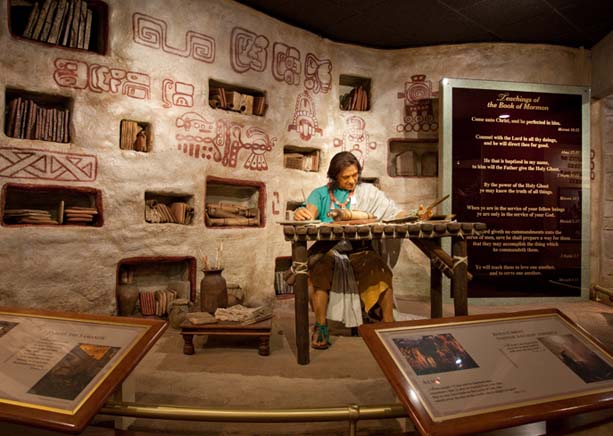
M2C is depicted in the North Visitors' Center on Temple Square, with Mormon surrounded by Mayan glyphs in one hill, while Moroni is far away burying the plates in New York. 

Contrary to the Gospel Topics Essay on Book of Mormon Geography, advocates of M2C claim prophetic and Church support of their theory because of this display and other visual representations.


The panels at the exhibit include Arnold Friberg's famous paintings of Book of Mormon scenes in Central America, along with other artwork depicting M2C. 

A photo of "Mormon's hill" in Mesoamerica can be found on lds.org here.

[Note: It is difficult to reconcile these displays with the Church's official position of neutrality. Plus, it is problematic in terms of Church history to physically separate the depository of Nephite records from Moroni's stone box.]

____________________

The New York (one Cumorah) setting as described by Orson Pratt:


“The particular place in the hill, where Moroni secreted the book, was revealed by the angel to the Prophet Joseph Smith, to whom the volume was delivered in September, 1827. But the grand depository of all the numerous records of the ancient nations of the western continent, was located in another department of the hill, and its contents under the charge of holy angels, until the day should come for them to be transferred to the sacred temple of Zion.”  
Orson Pratt, “The Hill Cumorah”, Millennial StarVol. 28, July 7, 1866, p. 417
_____

Tuesday, March 5, 2019

The 4 Cumorahs

Yesterday, I listed the 3 Cumorahs, plus the hybrid. Today let's discuss these four Cumorahs in reverse order.

In this post and all my posts, I don't claim any prophetic or Church support, and I'm not trying to persuade anyone. I'm merely stating the facts as I see them to help people make informed decisions for themselves.

The Gospel Topics Essay opens up the issue of Book of Mormon Geography like never before. No longer can the M2C intellectuals in the M2C citation cartel claim prophetic or Church support for their theories.

Now is an ideal time to reassess what we know about Cumorah and what alternatives there are.

Now, to the 4 Cumorahs.

Mormonism Unvailed - 1834
#3. Cumorah is nowhere because it is fictional. Critics have long claimed that Joseph Smith, alone or with the help of others, invented the Book of Mormon. An 1834 book, Mormonism Unvailed [sic] claimed Joseph and Sydney Rigdon coped the Book of Mormon from an unpublished book by Solomon Spaulding.

Responding to this book was one of the reasons why Joseph and Oliver Cowdery wrote the eight historical letters that were so widely published during Joseph's lifetime. Letter VII's claim that it was a fact that the Hill Cumorah is in New York was a direct response to the allegation that the Book of Mormon was fiction.

More recently, critics say Joseph drew on the King James Bible, The Late War and other pseudo-Biblical books, such as The American Revolution. An article in the Interpreter inadvertently supported that argument, as I discussed here:

http://interpreterpeerreviews.blogspot.com/2019/02/finding-restoration-significant.html

Other critics focus on Joseph's personal and family experience as a source for the Book of Mormon narrative. As such, they claim there was no "Hill Cumorah" in the real world, no Zarahemla, no land of Nephi, etc. According to them, the Book of Mormon is fictional, even if it was created with the intent to bring Christians together.

Some members of the Church also believe this idea that the Book of Mormon is inspired fiction, comparable to a parable that teaches about Christ and the gospel.

I don't accept the fictional Cumorah; I think the descriptions in the text and related scientific evidence (archaeology, anthropology, etc.) supports the traditional teachings about the New York Cumorah.

However, the fictional Cumorah is undoubtedly the most widespread belief in the world; i.e., most people don't believe in the divine authenticity of the Book of Mormon.
_____


BYU fantasy map
#2a. Cumorah can best be understood in a fictional setting, but it existed in a real place. This is the approach taken by CES and BYU. It's a hybrid between #2 and #3, but by de-linking the text to the real world, it leans more toward #3.

Employees at BYU and CES have generated fictional, or fantasy, maps to explain their interpretations of the geographical references found in the text. These show Cumorah in a fictional location on the premise that the prophets and apostles who taught the New York Cumorah were wrong.

Apparently, the employees don't want to (or have been told not to) teach students a specific setting in the real world. The reason: there is no consensus about any real-world setting among M2C intellectuals because they think the prophets were wrong about the New York Cumorah, and there is no further guidance about any Book of Mormon geography. The intellectuals think their interpretation of the text is the best, but it doesn't fit anywhere in the real world. The only viable alternative is a fantasy map.

The fantasy maps do impose a particular interpretation on the text, such as teaching that different terms (narrow neck of land, small neck, etc.) refer to the same unique geographical feature instead of different features. The fantasy maps all look a lot like Central America (Mesoamerica) except for the north/south orientation. That's hardly a coincidence, because most, if not all, of the CES/BYU employees believe in some form of M2C.

I don't accept the fantasy/mythology approach to Book of Mormon geography because I think it's a real history that took place in the real world.

In my view, using a fantasy map to teach the Book of Mormon to all the youth in the Church creates deep cognitive dissonance that will have a long-term impact. It frames the text as fiction, comparable to Lord of the Rings or another fantasy book, movie, or video game.

I think in the long term it is psychologically difficult, if not impossible, for someone raised to think of the Book of Mormon in terms of a fantasy map to also think of it as a real-world account of real-world people. 

The current generation of teachers/employees was raised to understand the Book of Mormon in a real-world setting (either or both of the New York Cumorah and Mesoamerican/Latin American settings). For them, it's possible to entertain the two competing ideas (real world and fantasy) at the same time. The fantasy map is merely an overlay on the literal history they were taught and accepted when they were young.

However, once the current generation, raised on the fantasy maps, becomes the teachers and leaders, I think it's inevitable that they will lean toward, and ultimately embrace, the fictional Cumorah and deem the entire Book of Mormon to be a myth.
_____


BYU Studies M2C Cumorah
#2. Cumorah is anywhere except in New York, but it somewhere on Earth, and probably in "the Americas."

As mentioned above, this theory originated in the early 1900s with scholars in the RLDS Church, but some LDS intellectuals embraced it based on anonymous articles in the 1842 Times and Seasons.

They conclude that Joseph Smith actually endorsed a Mesoamerican setting for the Book of Mormon. They reason that New York is too far from Mesoamerica to be the location of the "real" Cumorah of Mormon 6:6.

Although Joseph helped write Letter VII, had it republished multiple times and copied into his personal history, and wrote D&C 128:20, these intellectuals believe and teach that Joseph really didn't know where the Hill Cumorah of Mormon 6:6 was located. Instead, they teach that Joseph adopted a false tradition about the New York Cumorah that was started by other early Saints, probably Oliver Cowdery.

To shade their repudiation of the New York Cumorah, these intellectuals reason that there were, actually, two Hills Cumorah. The one in New York was merely the place where Joseph found the plates. The other one--the location of the final battles and the depository of Nephite records--was elsewhere.

The most popular theory for a non-New York Cumorah is the Mesoamerican/two-Cumorahs theory (M2C), which puts the "real" Cumorah in southern Mexico. Other variations use the reasoning behind M2C and apply it to other locations, including the Baja Cumorah (B2C), the Chile Cumorah (C2C), the Panama Cumorah (P2C), etc.

These proponents all claim "the text" is the most important consideration, but in every case, it's not the text but their interpretation of the text that is the most important consideration for their theories.

If you read their material, you will see it consists of two main components:

1. They all reject the teachings of the prophets and apostles about the New York Cumorah, which frees them to believe whatever they want, so long as they can interpret the text to justify their beliefs.

2. They all rely on circular reasoning and illusory evidence to confirm their bias regarding their preferred setting for Cumorah.

For decades, I accepted M2C because that's what my Seminary and BYU teachers taught and they convinced me. Like the current employees at Book of Mormon Central Censor, I thought people who disagreed with my M2C professors were ignorant, anti-science, etc. But when I took a more skeptical look at the substance of M2C, as set forth in publications, lectures, videos, etc., it became obvious to me that the whole thing was based on the two components listed above.
_____

#1. Cumorah is in New York.

The record is clear: there is no question that past prophets and apostles have taught, without equivocation, that the Cumorah of Mormon 6:6 is in western New York. [A partial list of their teachings is available here.]

No one has to accept those teachings, of course. People can question the reliability and credibility of those prophets and apostles, such as by saying they were unqualified and merely expressing their private opinions.

As a matter of Church history, rejecting the New York Cumorah requires a person to believe that Joseph's associates, including his mother, Oliver Cowdery, and David Whitmer, had poor memories and/or stated speculation as fact, and thereby misled members of the Church for decades. 

After all, Oliver Cowdery wrote, in Letter VII, that it was a fact that the final battles of the Jaredites and Nephites took place in the mile-wide valley west of the hill in New York where Joseph found the plates. Joseph had Letter VII copied into his personal history and republished in official Church newspapers. He never questioned, let alone rejected, the New York Cumorah. And why would he? His mother reported that he knew the hill was named Cumorah even before he got the plates. He could only have learned this from Moroni himself.

Joseph's early associates affirmed that Moroni himself said the hill was named Cumorah anciently.

Plus, according to several Church leaders, Joseph and Oliver had personally visited the depository of Nephite records in the same hill. This was no speculation on their part; they had personal experience.

But let's say, hypothetically, that the M2C intellectuals are right; i.e., all these associates of Joseph Smith, and all the prophets and apostles, were merely speculating (even though they never suggested anything of the sort).

Let's say they were "merely expressing their opinions." Does that make them wrong? Does that mean they misled the Church?

Of course not. 

Scientific evidence. If we shift to scientific evidence, the New York hill remains the best real-world candidate for the Cumorah of Mormon 6:6.

When he joined the Church, Heber C. Kimball visited the hill and observed the embankments around it. The area has since been plowed for decades, but detailed topographical maps suggest there may be one residual feature from the ancient embankment left.

Archaeologists and anthropologists have reported that around 300 A.D., the Hopewell civilization in Ohio ceased building sophisticated earthworks and instead built a series of defensive structures. This was about the time when Mormon traveled to Zarahemla and became the military leader of the Nephites. He led them on their wars with the Lamanites, which eventually ended in retreat to Cumorah.

Archaeologists say there was a general Hopewell movement toward western New York. Defensive structures similar to those in Ohio, although rapidly constructed, appear throughout western New York. Heber C. Kimball reported they were common knowledge. There are dozens of sites in western New York that show temporary occupancy of Hopewell people, even though the major Hopewell sites are centered in the Midwest (which Joseph described as the plains of the Nephites, but we're not relying on that in the scientific examination. He also correctly identified the trade network associated with Zelph, which archaeologists didn't figure out until much later, but we're not relying on that, either.)

Populations estimates for Book of Mormon people vary widely, but IMO, the text describes a relatively small population.

When Lachoneus assembled the Nephites in the center of the land to defend against the robbers, they "did march forth by thousands and tens of thousands." (3 Ne. 3:22). The numbers cited in the text  correlate to the Roman Numeral system of units, tens, hundreds, then thousands, tens of thousands, hundreds of thousands, and so on.

Mormon never gave us a census, but we can infer that some groups who assembled had thousands, while others had "tens of thousands." However large the number was, "they did dwell in one land, and in one body," beginning in the latter end of the 17th year. They had "reserved for themselves provisions... that they might subsist for the space of seven years." We wonder, how many people using A.D. 17 technology could you assemble in one place, together with enough provisions to last for seven years? A million seems highly unlikely. Mormon never used the term "hundreds of thousands." From that I infer the number was in the tens of thousands, possibly up to two hundred thousand, and was probably lower than that.

Mormon expressed his idea of a "great number of men," when he added "even to exceed the number of thirty thousand" (Mormon 1:11). The largest enumerated Nephite army was only 42,000 men (Morm. 2:9), assembled after gathering in their people (2:7), while the largest enumerated Lamanite army was only 50,000 men (2:25). This was around 346 AD, only about 40 years before the final conflict at Cumorah.

After years of slaughter and retreat, the Nephites assembled at Cumorah. My reading of Mormon 6 tells me Mormon and Moroni could see the bodies of their 20,000 people lying in the Cumorah valley. The other 21 leaders of their respective ten thousand each were killed elsewhere, either in the wars immediately leading up to the battle at Cumorah or the wars throughout Mormon's military career. This is also how I read Letter VII.

The physical evidence at Cumorah accommodates these numbers, both in terms of logistics and in terms of the number of arrowheads and other weapons found in the area over the years.

Other people reach other interpretations, of course. For example, some think the text requires volcanoes near Cumorah; when I read the text, I see no mention of volcanoes.

Consequently, the question of Cumorah will probably never be solved.

Unless the day comes, as President Ivins said in General Conference, that the rest of the plates come forth, are translated, and published to the world.
_____

Everyone is free to believe whatever he/she wants to believe. I'm not trying to convince anyone of anything. I want people to make informed decisions.

And I think that's what most of us want, as well.


Monday, March 4, 2019

The 3 Cumorahs

Last week, I suggested that the Hill Cumorah is the keystone of Book of Mormon historicity. According to the Gospel Topics Essay on Book of Mormon Geography, the Church has only one position, which is it has no position on the geography.

That leaves us with three Cumorahs to consider.

I'll outline them briefly here and discuss them in more detail tomorrow.
___

#1. Cumorah is in New York (teachings of past LDS prophets and apostles)

#2. Cumorah is anywhere except New York, but it is somewhere on Earth (teachings of LDS intellectuals but no LDS prophets or apostles)

#2a. Cumorah can best be understood in a fictional setting, but it existed in a real place somewhere in "the Americas" (teachings of BYU/CES)

#3. Cumorah is nowhere because it is fictional (teachings of some LDS members and most LDS critics)

Okay, I realize I just listed 4 Cumorahs, but #2a is really a hybrid between #2 and #3, so I didn't count it separately.

I'm reviewing these 3 Cumorahs because, if current trends continue, Cumorah #3 appears destined to prevail not only in the world as a whole, but also among members of the Church.
_____

If I were to rank these different Cumorahs by acceptance rates, #3 is overwhelmingly the favorite in the world.

The percentage of the world's population that doesn't think Cumorah is fiction would show up as a thin line on a pie chart.

That's assuming every member of the Church accepts Cumorah as an actual location in the real world.


_____

Now, let's consider which Cumorah members of the Church accept.

The conceptual graph to the left shows changes in beliefs over time.

From 1830 to about 1920, no one questioned the New York location of the the Hill Cumorah.

Letter VII was published in the Messenger and Advocate and then republished in the Gospel Reflector, the Millennial Star, the Times and Seasons, the Prophet, and the Improvement Era.

The New York Cumorah was taught in General Conference by members of the First Presidency. It was taught in doctrinal books published by the Church, including Jesus the Christ and A Marvelous Work and a Wonder.

From 1879 to 1920, the New York Cumorah was stated as a fact in the official editions of the Book of Mormon, indicated in a footnote to Mormon 6:6.

In the early 1900s, scholars from the Reorganized Church of Jesus Christ of Latter-day Saints (RLDS) opined that New York was too far from Central America to be the location of Cumorah. They speculated that Cumorah was in Mesoamerica; i.e., M2C.

Some LDS people began accepting this Mexican Cumorah. Elder Joseph Fielding Smith objected, warning that this idea would cause members of the Church to become confused and disturbed in their faith. Elder Smith's position prevailed until about the late 1950s, when more scholars began dicussing the M2C idea. By the 1970s, it was becoming more widely accepted.

In the 1970s, President Marion G. Romney and Elder Mark E. Petersen both gave General Conference addresses declaring that the Hill Cumorah of Mormon 6:6 was in New York, but M2C scholars ignored them, deeming their conference talks to be merely personal opinions that were incorrect because M2C was correct.

In 1990, the Office of the First Presidency released a letter stating that "The Church has long maintained, as attested to by references in the writings of General Authorities, that the Hill Cumorah in western New York state is the same as referenced in the Book of Mormon." The letter had been personally approved by Ezra Taft Benson, Gordon B. Hinckley, and Thomas S. Monson.

Nevertheless, M2C scholars deemed this as unofficial and incorrect. They continued teaching and promoting M2C.

Now, the anonymous Gospel Topics Essay recognizes that "individuals may have their own opinions regarding Book of Mormon geography and other such matters about which the Lord has not spoken."

The Lord has told us He speaks through his ordained leaders. Every prophet/apostle who has ever addressed the topic has affirmed the New York Cumorah. So far, no Church leaders have officially repudiated the teachings of the prophets and apostles regarding Cumorah.

Nevertheless, the Gospel Topics Essay says the Church doesn't take a position regarding these teachings about the New York Cumorah, so Cumorah #1 is just one option to consider, along with #2, #2a, and #3.

We can still evaluate the New York Cumorah using purely academic and scientific criteria, as I do in tomorrow's post.
_____

The trend toward M2C accelerated into the present (2019), accompanied by three developments.

1. CES and BYU stopped teaching students what the prophets have taught about Cumorah.

2. CES and BYU taught people about M2C, which was also supported by Church media, visitors centers, etc.

BYU fantasy map,
depicting Cumorah in a mythical setting
2. CES and BYU began teaching the Book of Mormon using computer-generated "abstract maps" that depicted Book of Mormon events in a fictional fantasy setting.

By now, most youth and young adults have been taught with these fantasy maps.

Going forward, it seems likely that the fantasy maps will become even more widespread, with the consequence that more members of the Church will naturally conclude that Cumorah is entirely fictional.

Tomorrow I'll discuss the four Cumorahs--in reverse order.

I think in the long term it is psychologically difficult, if not impossible, for someone raised to think of the Book of Mormon in terms of a fantasy map to also think of it as a real-world account of real-world people.
_____


Saturday, March 2, 2019

Very simple

The issue of Book of Mormon geography is very simple. People have different ideas, and there's nothing wrong with that. People should make informed decisions for themselves. Simple.

One of the strangest arguments I hear is "The Brethren have said the people living in Latin America have the blood of Lehi (or are Lamanites), so the Hill Cumorah cannot be in western New York."

The logical fallacies in that argument seem so obvious to me that I don't usually respond to it, but it remains one of the main justifications for M2C, so here goes.

It seems axiomatic that Lehi's descendants would have spread throughout the Americas regardless of  where Lehi landed around 580 BC.

Regardless of how many were in Lehi's landing party, or where Zarahemla, Bountiful, Cumorah, etc. were located, people migrate and intermarry. The Book of Mormon tells us less than 1% of the history. In 1,000 years of Nephite history, Lehi's descendants could have migrated throughout the Americas and beyond.

Even after the Nephite civilization was destroyed at Cumorah, 1400 years passed before Joseph obtained the plates. If Lehi's descendants hadn't migrated throughout the Americas before 400 A.D., they could have done so after 400 A.D.

The presence of Lehi's descendants throughout the Americas today has nothing to do with where the events in the Book of Mormon took place.

We're left with the teachings of the prophets about the New York Cumorah, which, so far as I know, have never been questioned, repudiated, or replaced by any of the prophets. We're also left with the teachings of many of those same prophets that we don't know where the other events took place.

The recent Gospel Topics Essay says the Church takes no position on the location of Book of Mormon events. That's really the only possible position to take when there are so many different ideas among Church members. The key is, no one should claim prophetic or Church support for their personal views.

I focus on the Cumorah issue because of the teachings of the prophets, and because I think the scientific evidence supports those teachings. Other good, faithful members of the Church don't believe those teachings, and/or disagree about the evidence, which is fine with me.

I support everything the Brethren have taught, from the beginning through the present.

I respect and admire LDS scholars and intellectuals who have worked on these issues, but I don't feel any obligation, duty, or even inclination to accept what they teach just because they claim expertise.


Friday, March 1, 2019

implying either prophetic or Church support

On this topic of Book of Mormon geography/historicity, I understand there is too much information and detail for most people. People are busy, so they tend to pick a side and stick with it. They simply assume someone must know what's going on, and that's good enough for them.

With that reality in mind, a preliminary question to ask is, do you pick a side that supports the teachings of the prophets, or a side that claims the prophets support their teachings?
_____

Yesterday we looked at the new Gospel Topics Essay on Book of Mormon Geography, which stated:

Individuals may have their own opinions regarding Book of Mormon geography and other such matters about which the Lord has not spoken. However, the First Presidency and Quorum of the Twelve Apostles urge leaders and members not to advocate those personal theories in any setting or manner that would imply either prophetic or Church support for those theories.

According to this policy, Book of Mormon Central and other members of the M2C citation cartel should cease promoting M2C immediately.

They won't, of course. But until they do, we'll keep pointing it how directly they are contravening the new policy.
_____

Some people wonder how the M2C advocates are implying either prophetic or Church support for their theories. (Actually, they imply both.)

Today let's look at Book of Mormon Central, which I call Book of Mormon Central Censor (BOMCC) because they actively promote M2C and censor information that contradicts M2C.

It's very unfortunate, actually. I like everyone at BOMCC. I think they do a lot of good, and I use their resources all the time. But their focus on M2C taints everything they do. Readers and viewers can never be sure if they are reading/watching accurate information or editorial promotion of M2C. Usually it's the latter.

Their censorship of other viewpoints is anti-academic, the opposite of inclusive, and a direct violation of the Church's long-stated policy of neutrality.

They will never change because they've convinced themselves their theories are right and that they have prophetic and Church support for their theories.

Every theory of Book of Mormon geography has critics and supporters. I encourage people to believe whatever works for them. But I oppose censorship.

This is where I disagree with BOMCC: I encourage people to make informed decisions by learning all the facts, including the teachings of the prophets along with the various sciences.

I don't claim prophetic or Church support because the Church, "officially," is completely neutral on these issues. I censor nothing. I seek input and correction if I ever misstate a fact or misrepresent an opinion or theory. I'm not trying to persuade anyone of anything; instead, I encourage education and comparisons of different ideas. I even encourage people go to the M2C web pages and read their material to see for themselves. In this very post, I'm linking to BOMCC websites. I've linked to websites that promote other theories as well, so everyone can see what everyone else thinks.

Now, let's compare by seeing how BOMCC advocates the M2C theory and claims prophetic and Church support for their theory.
_____

M2C advocacy

First, note that it's very logo shows it promotes M2C. It features four languages they think are scriptural: Egyptian, Greek, Latin, and Mayan.

BMAF logo showing M2C
Second, BOMCC is merely a legal front for BMAF, the 501(c)(3) organization that donors are actually contributing to. BMAF's corporate mission is "to increase understanding of the Book of Mormon as an ancient Mesoamerican codex."

BOMCC promotes M2C through the selection of material it puts in its archive, through its articles called Kno-Whys, through its educational outreach programs, and through its art collection and contests.

I think it's great when people donate to BOMCC, so long as donors realize they are donating to support the Mesoamerican/two-Cumorah's theory which teaches that:

1. The events of the Book of Mormon took place entirely in Mesoamerica. The hill in New York where Joseph found the plates is not the Hill Cumorah of the Book of Mormon. That hill is somewhere in southern Mexico.
2. Anyone who disagrees with M2C is naive, uninformed, and wrong.You have to be trained in Mesoamerican studies to completely understand and interpret the Book of Mormon and Church history.
3. Past prophets who taught that Cumorah is in New York were expressing their private opinions and were wrong. Instead of letting Church members know what the prophets have taught, it's better to focus on the teachings of current M2C intellectuals.
4. It's important to censor information that contradicts M2C so Church members won't be confused by other ideas and comparisons. It's also important to depict M2C in Church media, visitors centers, etc.

Again, I'm fine with people believing all of this--but it should be an informed decision, not the result of viewpoint-enforcing censorship and sophistry.

Among the considerations people should make when deciding whether to accept and support M2C are these:

1. M2C supports the arguments of the critics, such as the CES Letter.
2. No non-LDS Mayan experts see any connection between the Book of Mormon and Mesoamerica or the Mayans.
3. Teaching people that the prophets are wrong about the New York Cumorah can impact faith. Long ago, Elder and President Joseph Fielding Smith warned that the idea of "two Cumorahs" would cause members of the Church to become confused and disturbed in their faith in the Book of Mormon. We should ask whether we see that warning being fulfilled all around us.


There is no stronger advocate of M2C than BOMCC.
_____

Claiming prophetic and Church support

BOMCC doesn't just imply prophetic and Church support; it outright claims it.

Their entire pitch to donors is based on their claim for prophetic and Church support!

Here's one of the FAQs on its web page, designed to solicit money from Church members:

Relationship of Book of Mormon Central to the Church of Jesus Christ of Latter-day Saints

All BMC executives, board members, and employees are active, faithful, believing members of the Church of Jesus Christ of Latter-day Saints. Some of our volunteers are members of Community of Christ or Restoration Branch congregations. BMC receives no funds directly from the Church, only via the Church of Jesus Christ of Latter-day Saints Foundation, and is not controlled in any way by the Church. The semi-official Church News ran an article about BMC in January, 2016. Most of our readership are Latter-day Saints. Church departments have met with us to understand precisely what we are doing. Lds.org links to bookofmormoncentral.org and we anticipate more links in the future. Some full-time CES employees volunteer with us. The Church has begun licensing the LDS scriptures to outside entities, and BMC received the first such license so that we can re-publish these sacred texts with engaging enrichment material such as art, music, explanatory notes, etc. We held our 2016 Moroni Day celebration in the Joseph Smith Building on Temple Square. The Church has sent some of their experts to consult with us and help us improve certain technical skills.

BMC is not officially endorsed by the Church, although we are a trusted independent organization. Members of the Twelve and the Seventy have keynoted BMC events. Church leaders and employees work with us both as private individuals and occasionally in official capacities. We hope our efforts help all of the religious organizations within the Restoration Movement who cherish the Book of Mormon. We hope our materials prove useful to missionaries working with investigators. We hope our approach helps many people stay in the boat as Elder Ballard taught in his October, 2014 & October, 2016 General Conference addresses. Our publications ultimately depend on research. Research is inherently exploratory and uncertain. Being completely independent empowers BMC to take calculated risks which the official Church would not be comfortable undertaking. If we are successful, the Church benefits. If we are not successful, the Church is not embarrassed. We support the Church’s mission to help more of God’s children feast upon the words of Christ in the Book of Mormon.

I think it's great when people donate to BOMCC, just so long as they realize they are contributing to M2C and to an organization that violates the Church policy of neutrality.

More screen captures from https://bookofmormoncentral.org/content/donate